
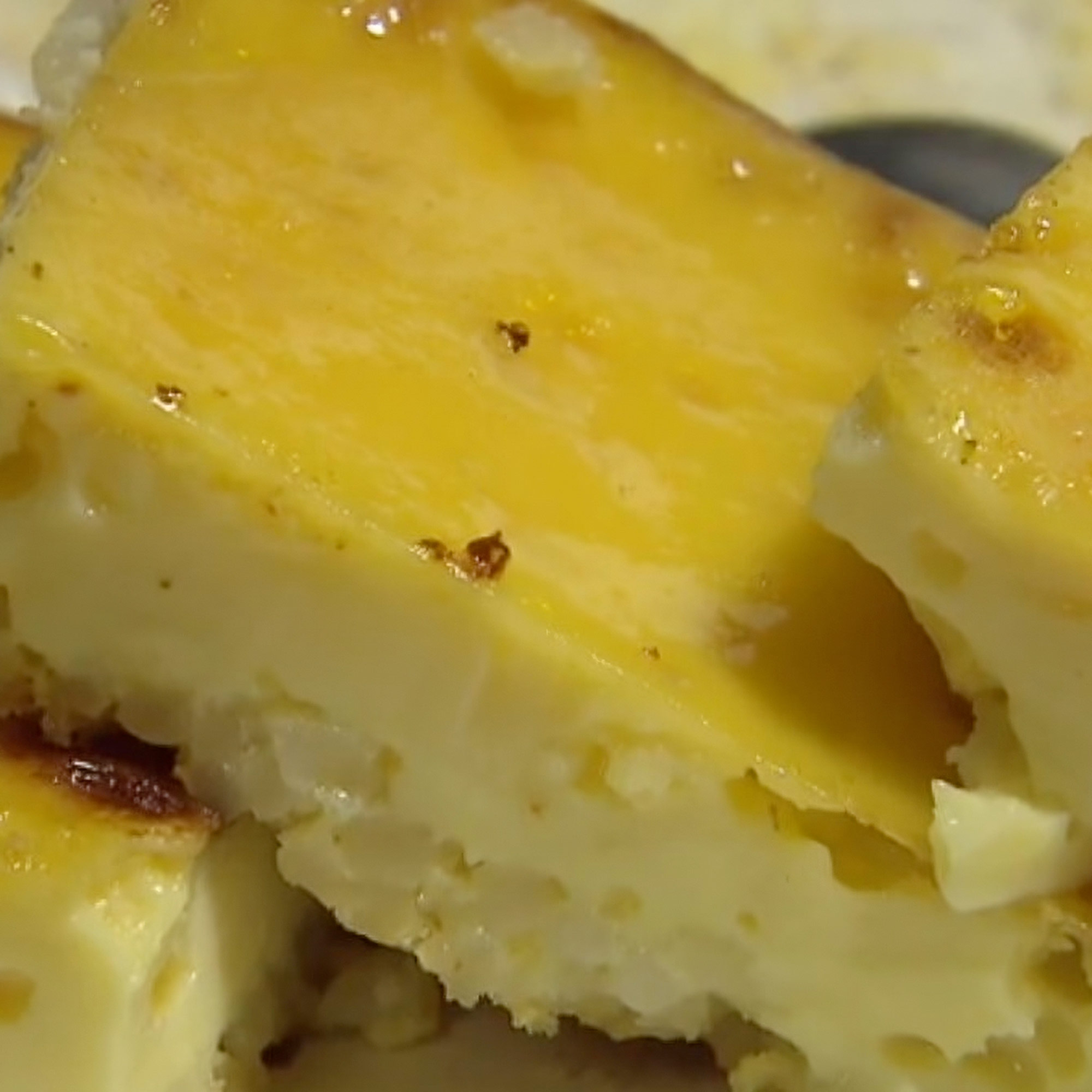
Rice cake is more than just a signature dessert for the people of Massa and Carrara: a staple of any self-respecting holiday meal, the delicious cake made with milk, eggs, rice and sugar is now a ritual, made up of recipes handed down through generations, with “tricks” and “secrets” that make each version “special.”
Some people add a pinch of salt to it, others a crushed mint candy (while others shudder at the idea), and there is absolutely no agreement on what is the right “refreshment” (the liquor to be added to the dough before baking): the ancient Alchermes, from the Florentine tradition; the Modenese Sassolino, with its spicy anise flavor; the Benevento Strega, which gives the yellow of saffron; or some homegrown “rum,” those old blends of alcohol, syrups and flavorings that used to be called “Rum Fantasia.” Some claim a skillful mixture of the above (or other similar) should be used, but beware, nothing should be left to chance, and there are precise recipes even for these alcoholic “potions.”
Tradition then becomes a challenge when trying to award the palm for the best rice cake, a competition that can spark rivalries between relatives, friends and villagers, and result in heated arguments when it comes to establishing which town or village boasts the tastiest recipe: the issue is not limited to the historic parochialism that divides and unites the two capitals, Massa and Carrara, but extends to the hamlets and mountain villages.
In Avenza, where they are used to prepare the cake for the feast of St. Mark, there is no doubt: the best rice cake is theirs! From Mirteto, near Massa, they respond with a real festival of the typical cake, in the “mortegiana” variant, on the day of San Vitale. On the mountains of Carrara, the inhabitants of Gragnana, who bake rice cakes for St. Michael, and those of Bedizzano, who for the feast of St. Genesius bake the dessert in a variant where the rice almost disappears (and here, too, a crowded festival was organized). The only ones to refrain, from this bitter contention, seem to be the Colonnadians, who hold tightly to their vigorous Lardo di Colonnata IGP, snubbing perhaps the bourgeois character of the typical cake.
There is no shortage of competitions, with tastings and juries, able to establish without possibility of appeal which is the “truest” and best, among the rice cakes: there have been some in Marina di Massa, Montignoso, Ronchi and elsewhere, even on social networks, where people voted (by necessity) only for the best-looking cake. On a popular social network there is even a dedicated group (“The real rice cake of Carrara and its surroundings”) with over eight thousand members, often engaged in lively discussions.
We avoid dealing with the thorny topic of the “original” recipe, knowing full well that we cannot please everyone, but you can find various “official” versions of it with a brief search on the Internet: it is up to you to choose between some matters of paramount importance, such as the number of eggs to be used per liter of milk, whether eight (for the shy), ten (for sensible people), twelve (for the gluttonous) or more (for the real daredevils). In short, as you may well have guessed, rice cake is not an everyday recipe, but a “bomb” of flavors to be reserved for festive days.
Experts such as Paolo Petroni, journalist, author and president of the “Italian Academy of Cuisine,” and writer and local gastronomy expert Alma Vittoria Cordiviola have spoken out on the origins of the preparation: the ancestor of the modern cake would thus be an ancient savory cake, with boiled spelt or barley, sheep or goat milk, and cheese. Sugar was a luxury for the few, and rice almost unknown, this at least until the second half of the nineteenth century, when products from the new rice fields of Massarosa, near Lake Massaciuccoli (LU), began to circulate. The characteristic red rice, with its elongated grains, was much milder than spelt or barley, and was soon used to produce the first rice cakes.
At this point, the two authors posed the question? What social class could afford milk, eggs (in abundance), rice, sugar and liquor to make the delicious cake? The main clue is the wealthy marble bourgeoisie, which precisely in the late nineteenth century and early decades of the new century experienced unprecedented growth, driven by the constant international demand for Carrara marble (and sculpture).
History thus seems to point to the marble city as the cradle of the rice cake, but beware: someone points out that Cordiviola is a true “carrarina” and also ran a business for a long time in the city’s historic center. Her judgment is undoubtedly biased, not objective, it’s all to be recast!
By now it is clear, rice cake is not to be trifled with. If you happen to taste one (there are now many bakeries and restaurants offering it), appreciate it without too many questions: it is a sensitive subject!